
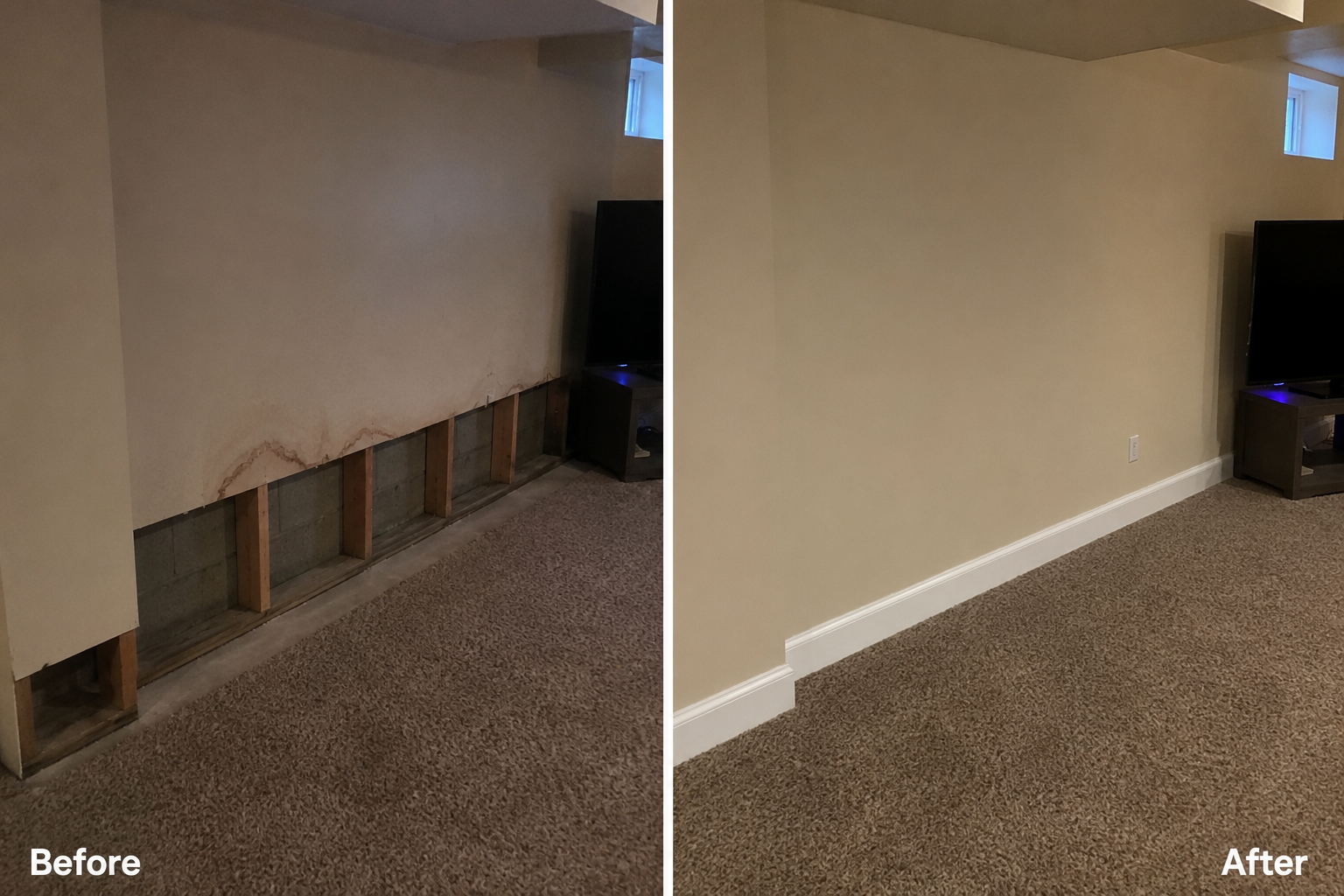
Stop the water first
Nothing else matters until the source is stopped. Shut off the supply at the fixture or at the main. If it's a roof leak, get a tarp on it.
We won't close a wall over an active leak, and no honest contractor will.
Get air moving
Open the space up. Fans and a dehumidifier in the room make a real difference in the first day. Wet gypsum loses strength quickly, and the longer material stays saturated, the more of it has to come out.
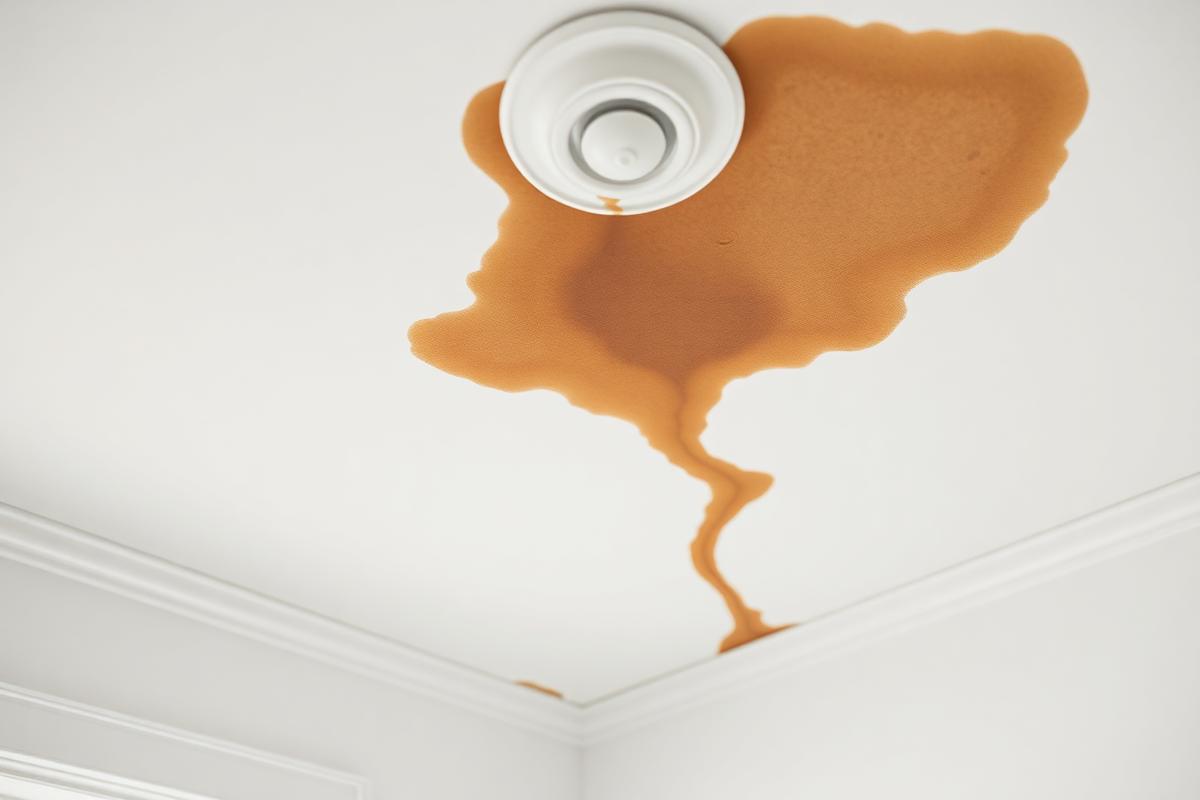
Document everything before you clean up
Photograph the damage from multiple angles before anything is moved, torn out, or dried. If there's a claim, these photos are the most valuable thing you'll have.
Keep receipts for anything you buy to mitigate, fans, tarps, a dehumidifier rental.
Know what has to come out
Drywall that got wet and dried may look fine and still be compromised. The paper facing delaminates and the gypsum core loses integrity. Wet insulation almost always has to be replaced; it holds moisture against the framing.
A moisture meter tells the truth. Looking at it does not.
Then rebuild
Once the substrate reads dry, the rebuild is straightforward: new board, tape, coat, texture match, prime. Done properly, there's no evidence the room ever flooded.
Related services