
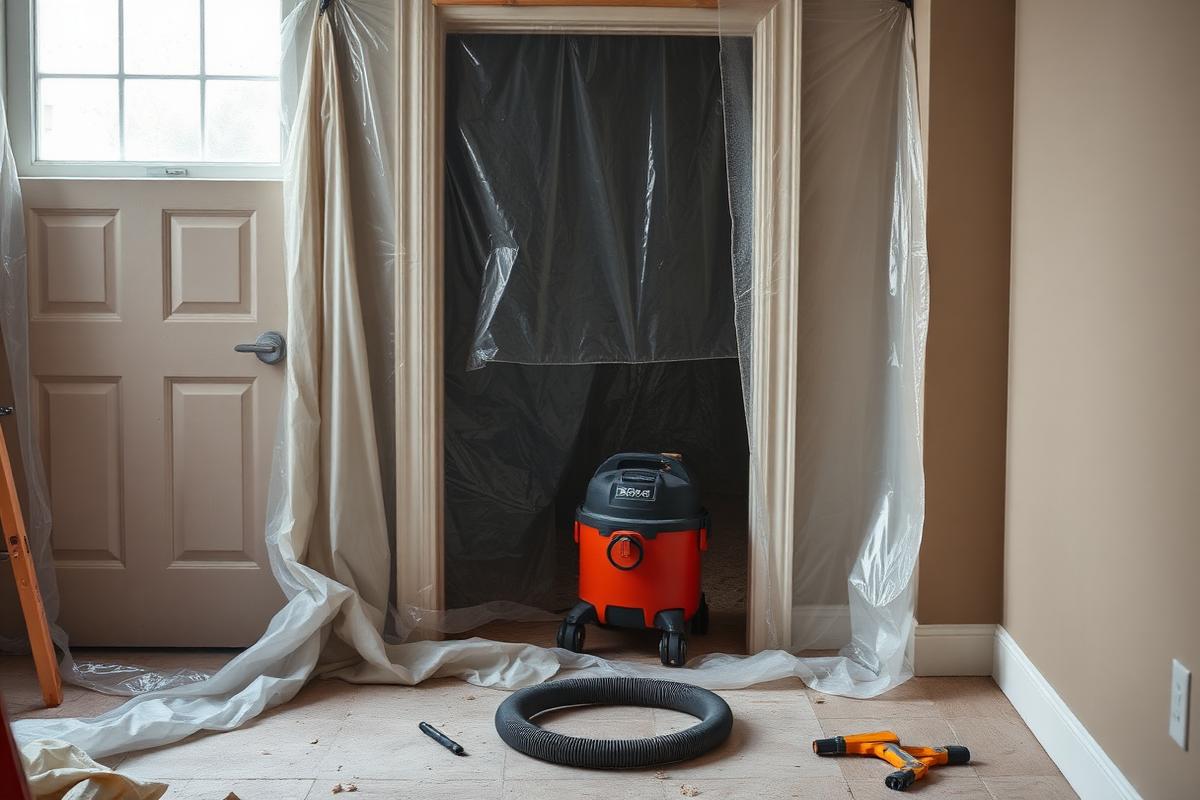
Dust is the real disruption
Homeowners expect noise and expect the work to take a few days. What surprises people is dust, fine gypsum particles travel through a house and settle on everything, including inside cabinets two rooms away.
Containment is not an upgrade. It's the baseline of working in an occupied home.
What containment looks like
Plastic sheeting sealed over doorways with a zipper for access. HVAC supply and return vents in the work area covered so the system doesn't distribute dust through the whole house. Floors protected wall to wall, not just where someone is standing.
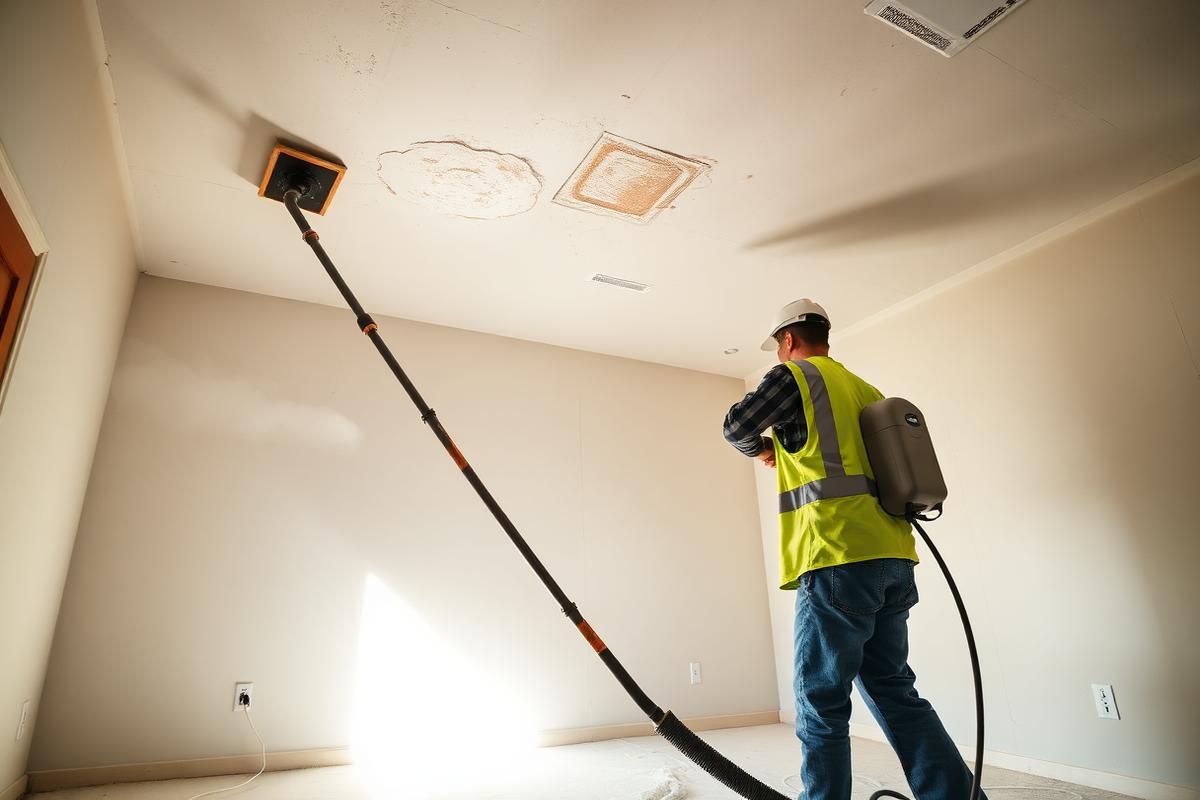
Sanding methods that reduce dust
Vacuum-assisted pole sanders capture the majority of dust at the source. Wet sanding with a sponge eliminates airborne dust entirely and is appropriate for small repairs, though it is slower and can't produce the same flatness on large areas.
On most jobs we use a combination: vacuum sanding for the bulk of the surface, hand work at edges and corners.
What to ask before you hire
Ask how they'll protect your floors. Ask whether they cover HVAC returns. Ask who cleans up and when. The answers tell you a great deal about how the rest of the job will go.
Related services